
| Unique ID | Title and Description |
|---|---|
pdtdbl00007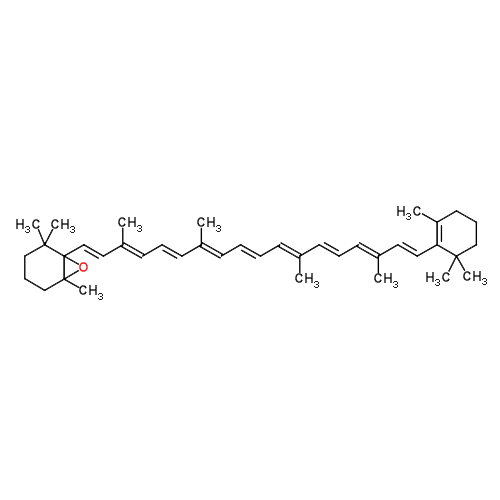 |
beta-Carotene 5,6-Epoxide () 5,6-epoxy-beta-Carotene was much more active than β-Carotene in the induction of differentiation of NB4 cells. |
pdtdbl00020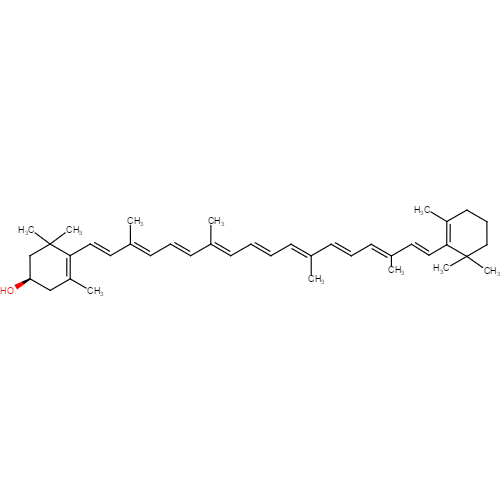 |
beta-Cryptoxanthin () β-Cryptoxanthin,Cryptoxanthin, Cryptoxanthol, or Hydroxy-β-Carotene belongs to the class of Carotenoids, more specifically the Xanthophylls. In the human body, β-Cryptoxanthin is converted to Vitamin A (Retinol) and is therefore considered as a Pro-Vitamin A. It can be found in many vegetables and fruits, mainly in papaya, mango, peaches, oranges, tangerines, bell peppers, corn and watermelon. β-Cryptoxanthin is also found in some yellow coloured animal products such as egg yolk and butter. β-Cryptoxanthin is a strong antioxidant and prevents that free radicals can damage your cells and DNA. β-Cryptoxanthin seems to reduce the risk of lung cancer and colon cancer. Studies have demonstrated that β-Cryptoxanthin can reduce the risk of lung cancer by more than 30%. Researchers believe that the anti-cancer effect is linked to the antioxidant effect of β-Cryptoxanthin, but also to a specific expression of a gene that protects cells from becoming cancerous. Other studies showed that β-Cryptoxanthin reduces risk for rheumatoid arthritis by 41%. β-Cryptoxanthin is a source of Vitamin A, but about 2 times less strong than β-Carotene. |
for the query 'C40H56O'
PDTDB by Dr. T. Ashok Kumar is licensed under a Creative Commons Attribution-NonCommercial-ShareAlike 4.0 International License.
Copyright © 2009 - 2026 BioGem.Org | Designed and maintained by Dr. T. Ashok Kumar
Last Modified on 20 June 2018
