
| Unique ID | Title and Description |
|---|---|
pdtdbl00063 |
Kaempferol () Pure kaempferol is a yellow coloured powder. Amphoral is one of the most important and most widespread flavonoids (containing the typical C6-C3-C6 structure). Kaempferol is a flavonoid present in various natural sources including apples, onions, leeks, citrus fruits, grapes, red wines, gingko biloba, St. John's wort. Keampferol is a strong antioxidant and helps to prevent oxidative damage of our cells, lipids and DNA. Kaempferol seems to prevent arteriosclerosis by inhibiting the oxidation of low density lipoprotein and the formation of platelets in the blood. Studies have also confirmed that kaempferol acts as a chemopreventive agent, which means that it inhibits the formation of cancer cells. Numerous preclinical studies have shown kaempferol and some glycosides of kaempferol have a wide range of pharmacological activities, including antioxidant, anti-inflammatory, antimicrobial, anticancer, cardioprotective, neuroprotective, antidiabetic, antiosteoporotic, estrogenic/antiestrogenic, anxiolytic, analgesic, and antiallergic activities. |
pdtdbl00146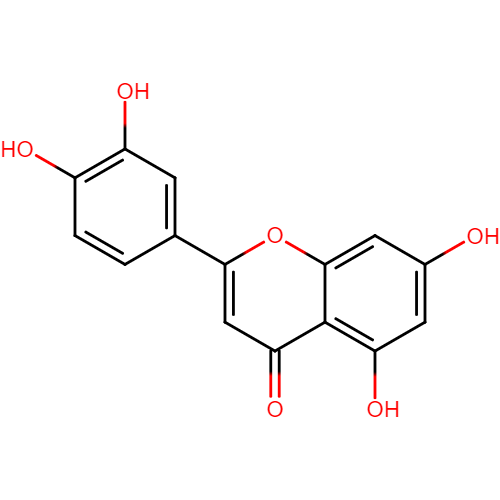 |
Luteolin () Luteolin can be found in Terminalia chebula or Haritaki, a major constituent of several traditional Ayurvedic medicines. Luteolin is most often found in leaves, but it is also seen in rinds, barks, clover blossom, and ragweed pollen. It has also been isolated from the aromatic flowering plant, Salvia tomentosa in mint family Lamiaceae. Dietary sources include celery, broccoli, green pepper, parsley, thyme, dandelion, perilla, chamomile tea, carrots, olive oil, peppermint, rosemary, navel oranges, and oregano. It can also be found in the seeds of the palm Aiphanes aculeata. |
for the query 'C15H10O6'
PDTDB by Dr. T. Ashok Kumar is licensed under a Creative Commons Attribution-NonCommercial-ShareAlike 4.0 International License.
Copyright © 2009 - 2026 BioGem.Org | Designed and maintained by Dr. T. Ashok Kumar
Last Modified on 20 June 2018
